
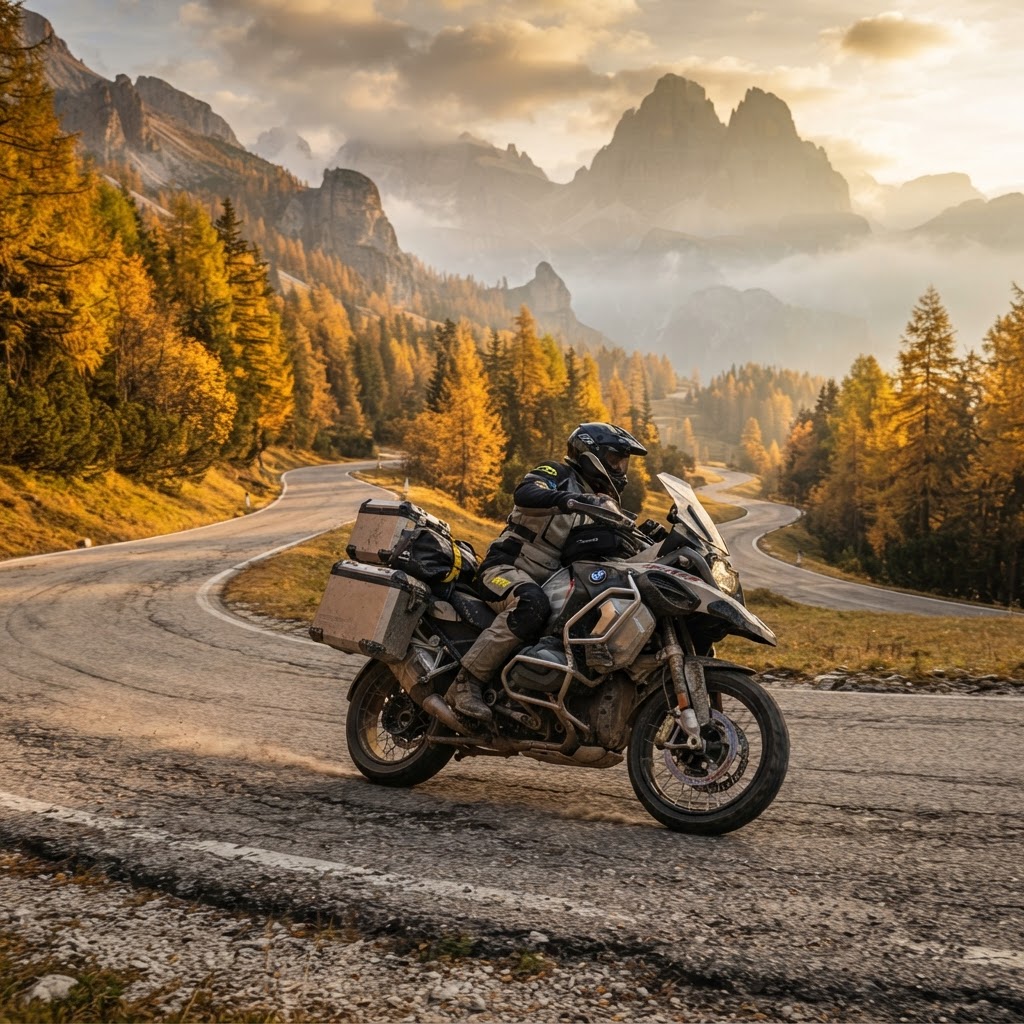
September delivers one of the most rewarding yet technically demanding riding windows on the calendar. The scorching dog days of summer give way to crisp morning air, golden forestry, and quiet corridors across mountain switchbacks and backcountry trails. Yet, this transition period poses sudden challenges: fluctuating tarmac temperatures, low-angle blinding sunlight, slick carpets of early leaf fall, and sharp evening cold snaps. Navigating autumn transitions requires deliberate adjustments in your riding technique, cockpit strategy, and gear configuration.
The Physics of Fall Traction: Cold Rubber and Slippery Organic Matter
As overnight temperatures dive, the pavement loses the thermal reserve built up during July and August. Modern dual-sport and road-touring compounds require heat to reach their optimal glass transition state and mechanical grip. Launching into sharp apex carves straight from your driveway or trailhead on a cool September morning is an invitation to a low-side slide.
- Tire Warm-up Protocol: Dedicated trail and street compounds alike demand a progressive warm-up. Spend your first ten to fifteen minutes building surface friction through gradual, linear acceleration and controlled braking rather than aggressive side-to-side scrubbing.
- Managing Decomposing Organic Traps: Early fallen leaves look harmless, but when damp, decaying vegetation secretes tannins that create a frictionless slurry akin to black ice. Whether leaning your bike in an APEX twist or tracking singletrack in an ADVENTURE or CROSS run, preserve a more upright chassis orientation across shaded corners and leafy forest gutters.
- Cold Road Debris and Frost Lines: In elevated passes, mountain shadows linger far longer through late September. What appears to be damp tarmac around a blind hairpin can easily conceal an early morning freeze line. Maintain generous braking margins before corner entry.
"Smooth throttle modulation and proactive body position always trump reactive traction control. Give the bike time to read the terrain before asking for full lean angle."
Body Positioning Across Dynamic Terrain: ADVENTURE to TRIAL
Adapting your posture to autumn conditions depends entirely on the discipline you ride. AtacRide’s community knows that seasonal versatility is the hallmark of great guide work and long-distance touring alike.
Carving Corners on Pavement (APEX)
Keep your head up to spot traction variances through patchy sunshine and long late-afternoon tree shadows. Focus on reducing extreme lean angle by subtly moving your upper torso to the inside of the motorcycle, hanging off slightly to allow the tires to sit on flatter, wider rubber contact patches without sacrificing corner speed.
Off-Road and Technical Maneuvers (CROSS & TRIAL)
In wet or rutted woodland trails, moist soil shifts constantly beneath gravel layers. Shift your mass over the footpegs, drop your heels slightly, and maintain a relaxed, fluid grip on the bars. Gripping firmly with your knees against the fuel tank lets the bike track freely beneath you over hidden root obstacles obscured by leaf litter, maintaining traction without disrupting your steering head.
The Layering Blueprint: Regulating Heat from Dawn to Dusk
September riding is defined by temperature spreads that can swing by more than 15°C (30°F) in a single afternoon. Overdressing induces perspiration during technical off-road climbs, leading to dangerous core cooling once you hit high-speed open sections. A disciplined modular layering system is critical.
- Hydrophobic Base Layers: Ditch standard cotton entirely in favor of lightweight merino wool or performance synthetics that wick perspiration away from skin pores immediately.
- Packable Thermal Mid-Layers: Keep a compact, wind-blocking mid-layer or lightweight down thermal vest in your tank bag. It takes minimal space and can be quickly integrated during high-altitude fuel stops.
- All-Weather Laminated Outer Shells: Rely on an abrasion-resistant outer jacket equipped with direct-to-body venting zippers and a waterproof membrane. Adjustable intake vents allow you to cool your torso during midday sun, while weather-sealed cuffs prevent autumn wind draft during dusk transits.
Visibility and Cockpit Management in Low Autumn Sun
September ushers in shorter days and lower solar trajectories. Commuting or touring during dusk presents two distinct hazards: motorists struggling with intense glare and wild game becoming increasingly active near rural verges.
Combating Sun Glare and Fogging
Low sun angles reveal micro-scratches on visors that remain invisible in midsummer. Replace worn shields before setting out, inspect your Pinlock anti-fog insert, and favor adventure dual-sport helmets equipped with a sun peak and an internal drop-down drop visor. The peak acts as a physical shield against horizontal morning rays without forcing you to tilt your head awkwardly down.
Auxiliary Lighting and Passive Conspicuity
Complement your machine’s primary headlight with low-mounted auxiliary LED lights set to cast a wide beam spread. Not only does this triangulate your visual footprint for oncoming traffic, but it also illuminates ditches and timberlines where seasonal wildlife migrations introduce sudden road hazards.
Equip Your Autumn Journeys
Whether navigating technical singletrack, carving remote mountain passes, or setting out on multi-day backcountry itineraries, September offers unmatched scenery for prepared riders. Fine-tune your bike's tire pressures, double-check your layering toolkit, and hit the trail with calculated technique.

