
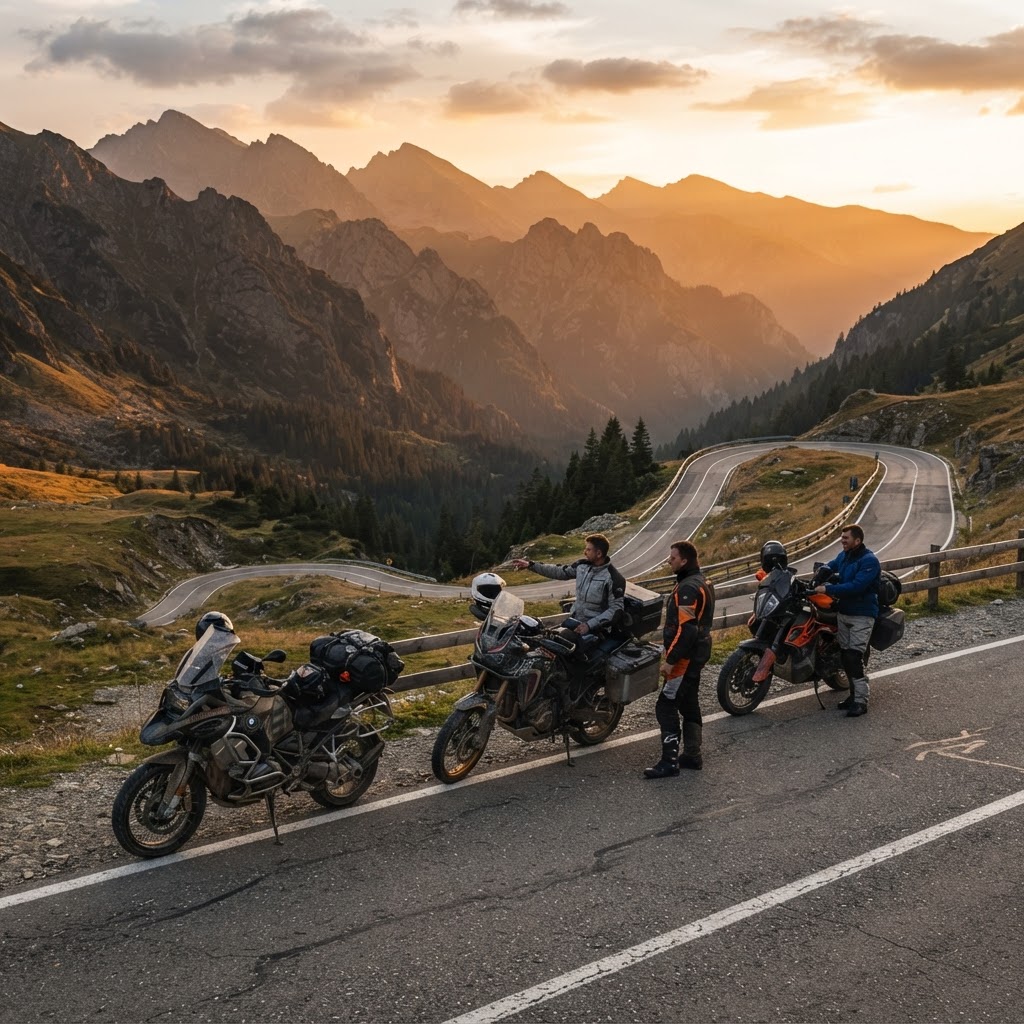
The Carpathian Calling: Why Romania is a Rider's Paradise
When you think of world-class motorcycle touring, the Alps often steal the spotlight. But for those who crave raw, untamed beauty and roads that feel like they were carved specifically for two wheels, the Carpathian Mountains in Romania are the ultimate destination. With a landscape defined by dramatic ridges, dense forests, and medieval history, Romania offers a riding experience that is as challenging as it is rewarding.
The Crown Jewels: Transfăgărășan and Transalpina
No discussion of the best motorcycle roads in Romania is complete without the Transfăgărășan (DN7C). Often cited as one of the best driving roads in the world, this 90km stretch of asphalt is a masterpiece of engineering. It climbs through the Făgăraș Mountains, reaching an altitude of over 2,000 meters. Expect endless hairpins, steep drops, and breathtaking views of the Balea Lake. It is a technical ride that demands focus, but the reward is a sense of accomplishment that few other roads can provide.
Then there is the Transalpina (DN67C), the highest paved road in the country. Reaching a staggering 2,145 meters at the Urdele Pass, it offers a more open, sweeping experience compared to the tight, technical nature of the Transfăgărășan. Riding the Transalpina feels like floating above the clouds, with ridge-line views that stretch for miles in every direction.
A Sample Itinerary: The Sibiu Loop
If you are looking for a concrete trip idea, consider a 3-day loop starting and ending in the historic city of Sibiu. This route captures the essence of Romanian motorcycling:
- Day 1: The Transfăgărășan Ascent. Head south from Sibiu toward Cârțișoara. Spend the day tackling the hairpins of the Transfăgărășan. Stop at the Vidraru Dam for photos and explore the Poienari Fortress ruins if you have the energy for the 1,480 steps.
- Day 2: The Transalpina Challenge. Ride west toward the Transalpina. This road is less crowded and offers a wilder, more remote feel. You will pass through shepherd villages and high-altitude meadows.
- Day 3: Cultural Detours. Return to Sibiu via the Olt Valley, stopping at local monasteries or the medieval town of Sighișoara to soak in the Transylvanian atmosphere.
Practical Tips for Your Romanian Adventure
While the riding is world-class, preparation is key. The high mountain passes are typically only open from late June through October, depending on snowfall. Even in the summer, temperatures at the peaks can be significantly lower than in the valleys, so pack layers.
"Romania is a land bursting with natural beauty and culture, but more importantly for two-wheeled travellers, it is home to two of the greatest motorcycle roads on Earth."
Fuel stations are generally reliable in towns, but always top up before heading into the high mountain passes. While the main tourist routes are well-paved, be prepared for occasional road work or livestock on the road—a common sight in the rural Carpathians. If you are looking to expand your skills beyond the tarmac, consider joining an adventure training session, similar to the ADV Motorcycle Off-Road Training in Bansko, to build the confidence needed for the more rugged, unpaved tracks that crisscross the region.
Why Book a Guide?
While self-guided tours are popular, booking a local guide can transform your trip. A guide knows the hidden gems—the best local guesthouses, the secret viewpoints, and the roads that don't appear on standard GPS maps. Whether you are looking for a high-octane adventure or a relaxed cultural tour, having an expert by your side ensures you spend less time navigating and more time enjoying the ride.
Romania is waiting. Whether you are carving through the hairpins of the Transfăgărășan or exploring the quiet, winding roads of the Apuseni Mountains, you will find that the Carpathians offer a unique, soulful riding experience that stays with you long after you have returned home.

